Selecting the right ceremonial handwear often comes down to a balance between visual prestige and physical endurance. In professional settings where appearance is a non-negotiable standard, the choice of fabric and closure can significantly impact a wearer's performance and confidence during high-stakes events.
Whether it is for a military honor guard, a high-end hotel butler, or a marching band, the requirements for hand protection and aesthetics vary. The industry has shifted from simple garment production to engineered apparel that prioritizes breathability and secure fit, ensuring that the gloves remain a seamless part of the uniform rather than a distraction.
This analysis explores the critical design elements and application standards for white cotton gloves, providing a professional framework for procurement and quality evaluation in the textile manufacturing sector.
The Role of Pure Cotton in Formal Apparel
The selection of 100% pure cotton is not merely a tradition but a functional requirement. For individuals spending hours in parades or formal duty, skin-friendliness and breathability are paramount to prevent moisture buildup and irritation.
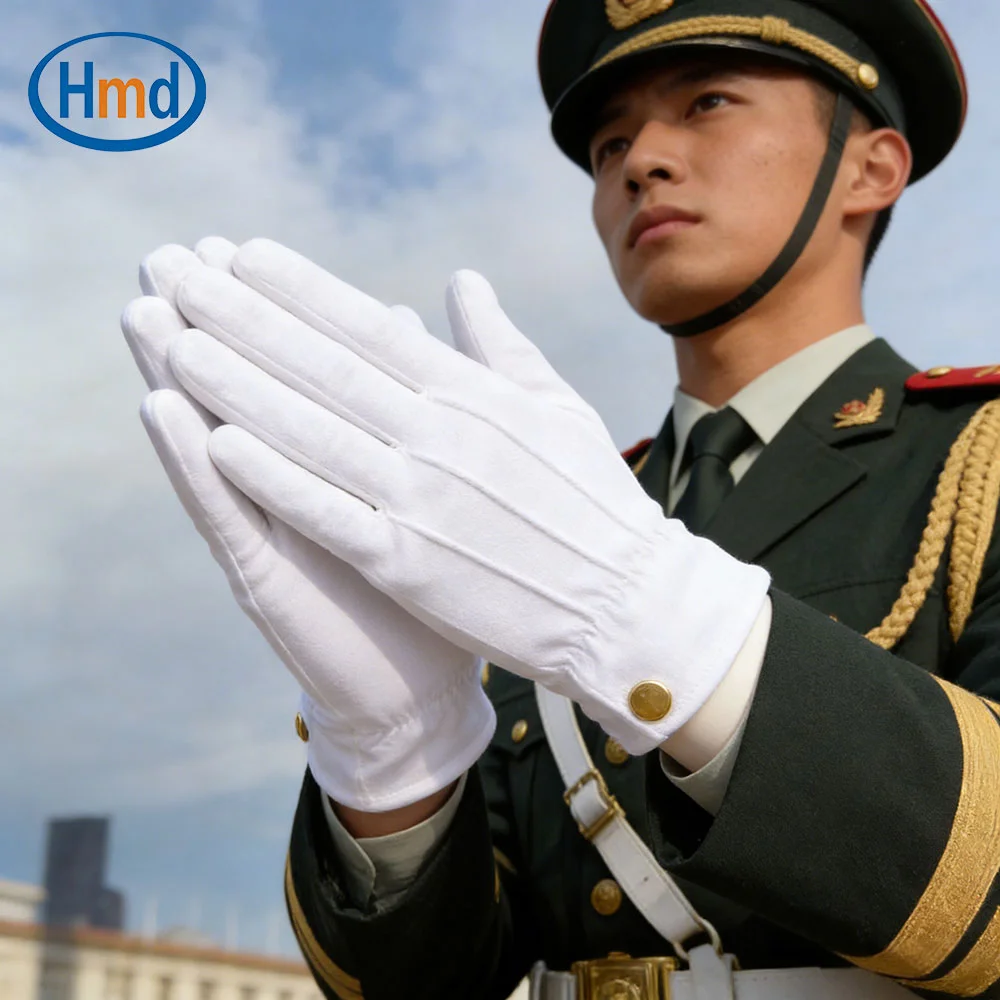
In the context of industrial textile manufacturing, utilizing long-staple cotton ensures a smoother surface and higher durability, which is essential for maintaining the crisp, clean look required for honor guards and hotel butlers.
Engineering the Professional Fit
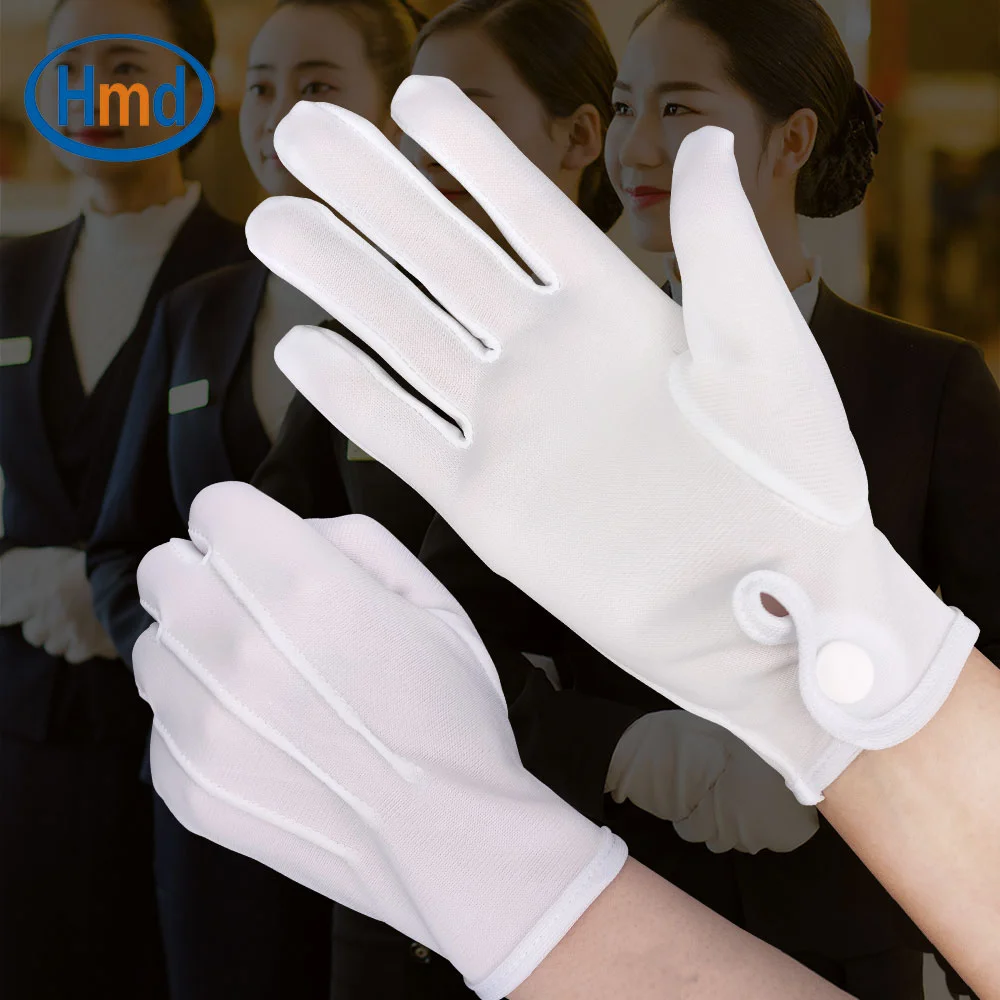
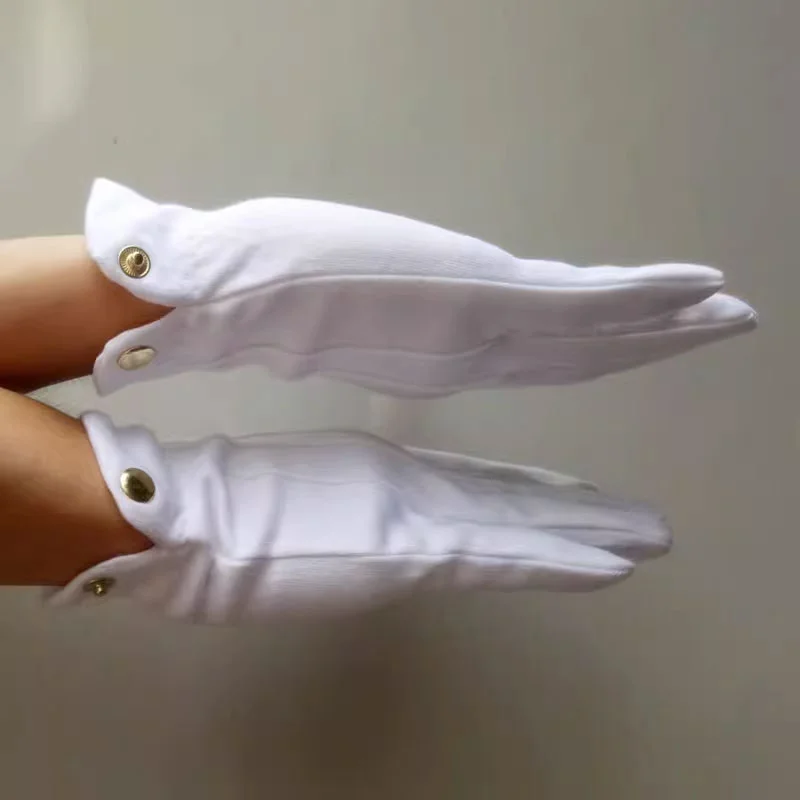
A common failure in mass-produced ceremonial gloves is the tendency to slip during active movement. To solve this, professional-grade designs incorporate a secure metal snap closure at the wrist. This mechanical fastener ensures that the glove remains snugly attached, which is critical for marching bands and referees who require precision in their hand movements.
Beyond the closure, the internal geometry of the glove must account for varying hand shapes while maintaining a slim profile. This is achieved through precise pattern cutting and the use of high-density knitting that provides a slight natural stretch without losing the garment's shape over time.
For bulk orders, the ability to customize sizing and closure strength becomes a key differentiator. Manufacturing facilities that support OEM/ODM services can adjust these technical specifications to meet the specific ergonomic needs of different professional teams or organizational uniforms.
Aesthetic Standards for Ceremonial Wear
Visual consistency is the primary metric for etiquette gloves. The "formal look" is defined by the absence of wrinkles and a sharp silhouette, particularly across the back of the hand.
The integration of tailored 3-rib stitching is a technical solution to a visual problem; it provides structural reinforcement that prevents the fabric from sagging, ensuring a professional, wrinkle-resistant appearance during long ceremonial hours.
Color purity is equally vital. The contrast between a stark classic white and a deep professional black allows these gloves to adapt to various uniform schemes, from the bright attire of an orchestra to the formal blacks of security services and hotel management.
Performance Metrics by Application
Different scenarios demand different performance priorities. For instance, a wedding requires maximum aesthetic purity, whereas a marching band requires a combination of durability and secure fit. The trade-off between thickness (for protection) and breathability (for comfort) is a constant consideration in textile design.
By analyzing these requirements, we can establish a relative value index for different product features across various use cases, highlighting where specific design elements like snap closures or 3-rib stitching provide the most utility.
Figure 2. Feature Importance Index by Use Case
Operational Scenarios and User Needs
In a typical industrial or ceremonial setting, the user's primary frustration is often the "shifting" of the glove. For an honor guard, a glove that slides down the wrist during a salute is a breach of protocol. This is where the transition from simple elastic cuffs to metal snap fasteners becomes an operational necessity rather than a luxury.
Additionally, the need for breathability is acute in outdoor parades. High-quality cotton fabrics allow for air circulation, reducing the risk of sweat-induced discomfort, which allows the wearer to maintain a composed and professional demeanor throughout their duty hours.
Future Shifts in Textile Customization
The market for formal gloves is moving toward deeper customization. Organizations no longer seek "off-the-shelf" products but require specific logo embroidery and tailored packaging to align with their brand identity.
Manufacturing capabilities are evolving to support smaller, highly specific bulk runs through OEM/ODM services. This allows for adjustments in color schemes and fabric blends—such as adding a small percentage of spandex for improved fit—without sacrificing the traditional aesthetic of cotton.
As quality standards like ISO9001 become the baseline, the focus is shifting toward the sustainability of the raw cotton sourcing and the efficiency of the production line to reduce costs for the end buyer.
Procurement Evaluation Framework
When sourcing gloves for professional use, procurement officers must look beyond the price per unit. The total value is determined by the longevity of the fabric, the reliability of the fasteners, and the consistency of the color across large batches.
A rigorous evaluation should consider the stitching density and the quality of the snap closures. Gloves that fail at the wrist or develop pills on the surface quickly lose their professional utility, necessitating more frequent replacements and increasing long-term costs.
The following framework provides a relative comparison of different design specifications to help buyers choose the most appropriate version for their specific operational environment.
| Feature | Formal/Ceremonial | Active Duty/Band | Hospitality/Service | Evaluation Priority |
|---|---|---|---|---|
| Fabric Weight | Medium-Light | Medium-Heavy | Lightweight | Breathability |
| Closure Type | Snap/Elastic | Metal Snap | Elastic/Hidden | Stability |
| Stitching | 3-Rib Tailored | Reinforced | Seamless | Appearance |
| Color Option | Pure White | White/Black | White/Black | Consistency |
| Customization | Logo Embroidery | Size Tuning | Packaging | Brand Alignment |
| Wear Life | Event-Based | High Cycle | Daily Use | Durability |
Questions & Answers
Pure cotton is preferred due to its superior breathability and skin-friendly properties. In ceremonial settings, wearers often spend long hours in formal attire; synthetic blends can trap heat and moisture, leading to discomfort and skin irritation. Cotton ensures the hands remain dry and comfortable, which is essential for maintaining the wearer's focus and professional composure during long parades or performances.
The 3-rib stitching serves as a structural reinforcement. Without it, cotton fabric tends to wrinkle or sag as the hand moves, which detracts from the sharp, professional look required for formal events. The ribbing maintains the glove's crisp silhouette and prevents the fabric from bunching, ensuring a neat appearance that meets the strict aesthetic standards of honor guards and orchestral performers.
Metal snap closures provide a mechanical lock that is far more secure than the tension-based hold of an elastic cuff. In high-activity scenarios—such as marching in a band or officiating a game—the constant arm movement can cause elastic gloves to slide down the wrist. Snap closures ensure the gloves remain firmly in place, eliminating the need for constant adjustment and ensuring the wearer looks professional at all times.
Yes, professional manufacturers typically offer OEM/ODM services. This includes customizing the size to fit a specific demographic, choosing between white and black colorways, and adding logo embroidery or printing. Furthermore, packaging can be customized to meet the institutional requirements of a company, ensuring that the gloves arrive in a state ready for immediate distribution to a large team.
Focus on three key areas: material purity, construction consistency, and hardware durability. Ensure the cotton is high-grade and breathable. Check the stitching for uniformity—specifically the ribbing—to ensure no loose threads or uneven lines. Finally, test the snap fasteners for a secure click and a snug fit on the wrist. Consistency across the batch is the most critical factor for professional uniforms.
These specific gloves are designed for etiquette, ceremony, and light-duty service. While they provide basic hygiene and a professional appearance, they are not intended for heavy industrial use, such as protection against chemicals, extreme heat, or high-impact abrasions. For industrial safety, specialized materials like leather or microfiber would be more appropriate, though these cotton versions are ideal for hotel butlers or security staff.
Final Thoughts
The value of a professional glove lies in the intersection of textile science and ceremonial tradition. By prioritizing high-quality cotton, secure fastening mechanisms, and structural stitching, organizations can ensure that their personnel present a polished image without sacrificing comfort.
As the demand for customized professional apparel grows, partnering with a direct manufacturer that understands these technical nuances—from ISO quality standards to specific OEM requirements—is the most effective way to balance cost-efficiency with uncompromising quality.