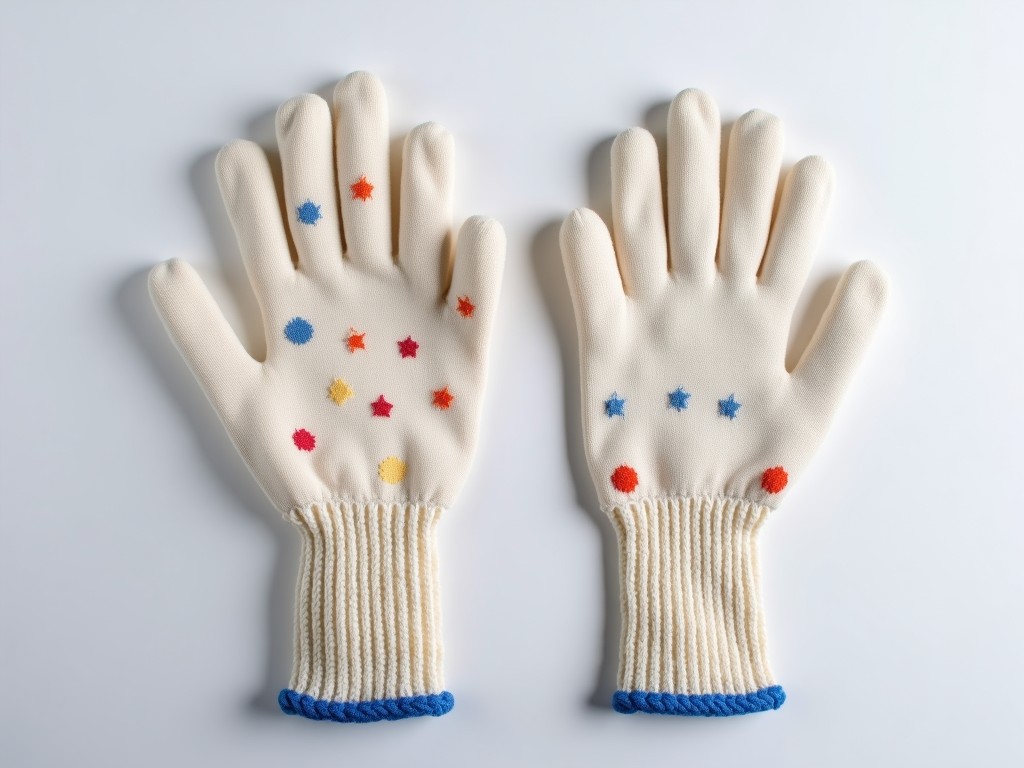
Knitted Cotton Working Gloves With Dots
Knitted cotton working gloves with dots provide a critical interface for industrial tasks requiring both high tactile dexterity and enhanced mechanical grip. These gloves leverage the natural
Knitted Cotton Working Gloves with Dots
Knitted cotton working gloves with dots provide a critical interface for industrial tasks requiring both high tactile dexterity and enhanced mechanical grip. These gloves leverage the natural moisture-wicking properties of cotton fibers while integrating a polymer dot coating to prevent tool slippage on various surfaces. This combination is essential in environments where hand comfort and breathability are non-negotiable for operator safety over extended shifts.
Technical Specifications
| Parameter | Typical Values |
|---|---|
| Base Material | 70% Cotton, 30% Polyester (customizable) |
| Knit Gauge | 7, 10, or 13 gauge |
| Coating Type | Polyvinyl Chloride (PVC) or Polyurethane (PU) |
| Dot Pattern | Full palm, Palm-only, or Striped |
| Size Range | S, M, L, XL (industrial sizing) |
Material Composition & Grip Technology
The performance of these gloves depends on the interaction between the knitted textile base and the polymer dots. High-grade cotton yarns ensure that perspiration is absorbed, preventing the moisture buildup that leads to hand fatigue and reduced grip strength. The dots themselves are engineered to increase the coefficient of friction, allowing workers to maintain a secure hold on objects with reduced muscular exertion.
Selecting between PVC and PU coatings depends on the specific application requirements. PVC dots are thicker and more resistant to mechanical abrasion, making them suitable for heavy-duty material handling. In contrast,, Polyurethane (PU) dots are thinner, offering superior sensitivity and precision for delicate work such as electronics assembly, where handling small components is required.
Industrial Applications
Industrial environments utilize these gloves where standard heavy-duty protective gear would be too restrictive. The design allows for a full range of motion while providing a barrier against minor abrasions.
- Electronics Assembly: Thin gauge knit allows for the manipulation of screws and wires while providing static-resistant properties.
- Logistics and Warehousing: The doted grip ensures secure handling of cardboard boxes and plastic-wrapped pallets in humid environments.
- General Maintenance: Protects hands from rough edges and debris while maintaining the flexibility needed for tool operation.
- Automotive Parts Handling: Provides necessary friction on oily metal components where standard cotton gloves would slip.
Manufacturing & Quality Control
Manufacturing begins with tension-controlled knitting to ensure uniform fabric density across all sizes. Consistent density is vital for preventing premature wear at the fingertips and palm. After the knitting process, the dots are applied via automated spray-coating systems, followed by a thermal curing stage that bonds the polymer to the cotton fibers permanently.
Quality control protocols include testing the tensile strength of the knit and verifying the adhesion of the dot coating under stress. Each batch is inspected to ensure the dot pattern is uniform, preventing areas of inconsistency that could compromise the safety of the end-user.
Frequently Asked Questions
Can the dot pattern be customized for specific branding?
Yes, specific dot patterns or logos can be integrated into the coating process for bulk orders, depending on the minimum order volume requirements.
What is the typical lead time for industrial orders?
Production lead times typically range from 2 to 4 weeks depending on the order volume and the specific material specifications requested.
Are samples available for site-specific testing?
Standard samples are available upon request to allow procurement teams to evaluate fit and grip performance before committing to a bulk purchase.
Require a technical data sheet or bulk quote for your facility?
Request Technical Quotation


