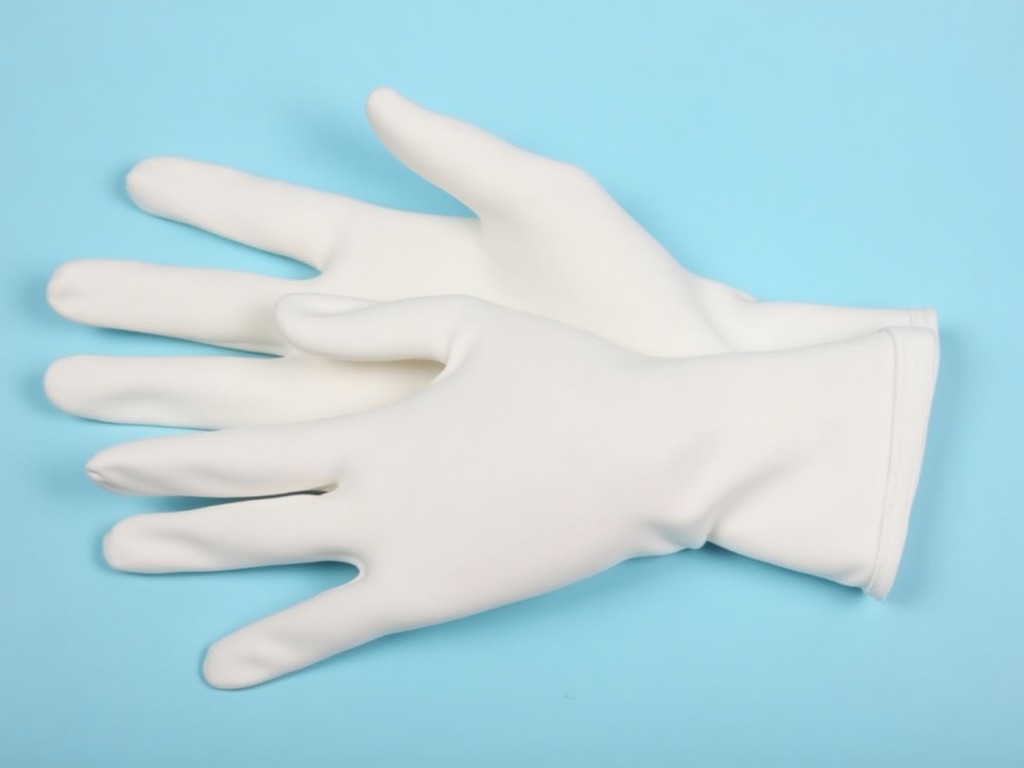
Buy White Cotton Inspection Gloves For Men
Precision inspection requires a barrier that prevents human-transferred contaminants—such as skin oils, acids, and moisture—from reaching sensitive surfaces during the quality control or assembly
Buy White Cotton Inspection Gloves for Men
Precision inspection requires a barrier that prevents human-transferred contaminants—such as skin oils, acids, and moisture—from reaching sensitive surfaces during the quality control or assembly process. White cotton inspection gloves provide a lightweight yet effective layer that maintains the integrity of optical, electronic, and mechanical components. These gloves are specifically engineered for environments where tactile sensitivity is paramount and the risk of surface contamination is high.
Technical Specifications and Construction
The construction of industrial inspection gloves typically utilizes a high-density jersey knit or rib knit structure to ensure a consistent fit across the hand. Weight, measured in grams per square meter (GSM), usually ranges from 130 to 200 GSM depending on the specific application requirements. Higher GSM counts offer a more robust barrier against mechanical abrasion but may slightly reduce the dexterity required for handling small hardware parts.
Material selection focuses on fiber purity and tensile strength. 100% cotton variants are preferred for their natural breathability and anti-static properties, while cotton-polyester blends are often utilized to increase elastic recovery and prevent shrinkage after repeated laundering cycles. The elastic cuff is designed to provide a secure closure that prevents the glove from sliding down the arm during repetitive manual tasks.
Functional Benefits for Industrial Inspection
Maintaining tactile sensitivity is the primary technical advantage of cotton gloves over coated synthetic protective gear. Unlike thick nitrile or latex, the thin cotton weave allows inspectors to feel minute surface irregularities, cracks, or improper fits in precision engineered parts. This feedback loop is critical during final-stage quality audits where a misalignment could result in assembly failure.
- High Breathability: Minimizes perspiration buildup, reducing hand fatigue during long-duration shifts.
- Low Lint Profile: Specially woven to minimize the shedding of fibers onto cleanroom surfaces or optical lenses.
- Static Dissipation: Natural cotton fibers help prevent static buildup that could damage sensitive microelectronic components.
Industrial Applications
In the electronics industry, these gloves serve as a primary defense when handling printed circuit boards (PCBs) and semiconductor components. Residual oils from fingers can interfere with soldering processes or cause corrosion over time; therefore, a cotton barrier ensures chemical stability on the metal traces.
The automotive and aerospace sectors also utilize cotton inspection gloves for handling polished chrome or stainless steel components to prevent fingerprints and acidic etching. Because the material is soft, it eliminates the risk of micro-scratches that can occur with coarser protective materials on high-value surfaces.
Material Comparison
| Material Type | Breathability | Tactile Sensitivity | Primary Use Case |
|---|---|---|---|
| 100% Pure Cotton | Excellent | Maximum | Optical & Glass Handling |
| Cotton-Poly Blend | Good | High | General Assembly |
| Reinforced Knit | Moderate | Medium | Heavy Duty Inspection |
Frequently Asked Questions
Can these gloves be laundered for reuse?
Yes, pure cotton gloves are typically laundable. However, repeated exposure to high-heat drying can eventually degrade the fiber integrity and reduce the elasticity of the cuff.
What sizes are typically available for industrial procurement?
Standard sizing usually ranges from Small to Extra Large. For large-scale OEM contracts, custom sizing can be requested based on ergonomic measurements to ensure uniformity across the workforce.
Are these gloves suitable for ESD-sensitive environments?
While natural cotton is low-static, for stringent ESD environments, we recommend blends with carbon-infused fibers to meet specific surface resistance requirements.
Ensuring the quality of your components starts with the right protective equipment. Contact our technical team for detailed specification sheets, bulk pricing, or customization options.
Request a Technical Quote


