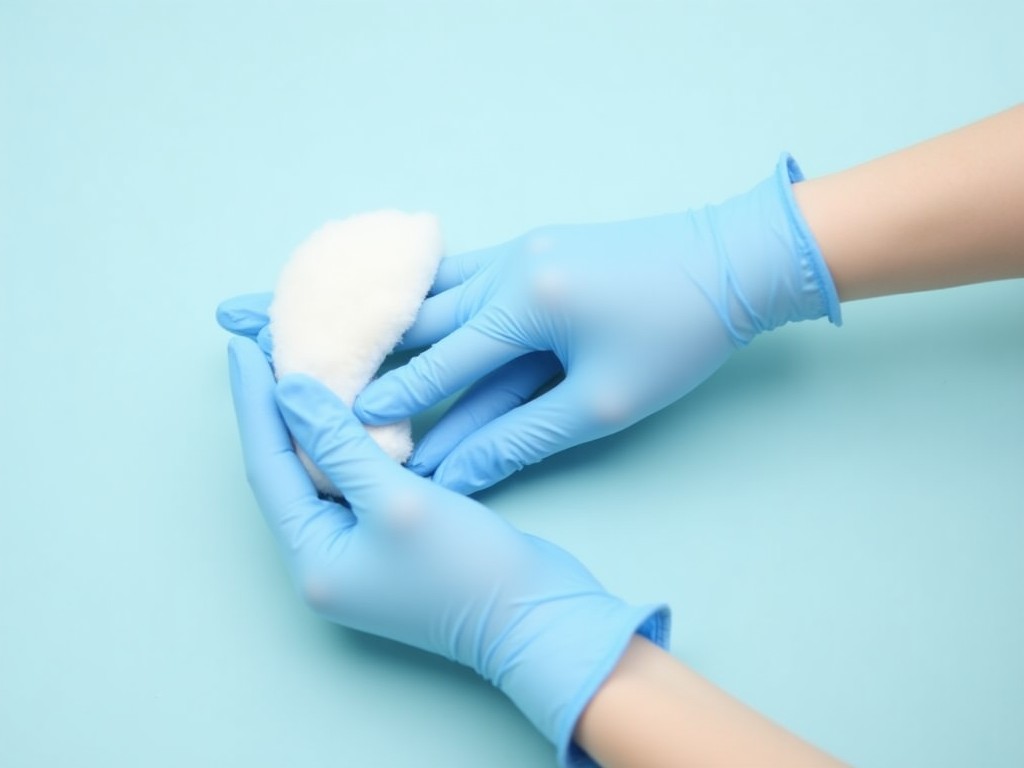
Best Price Rubber Gloves With Cotton Inside
Industrial rubber gloves featuring integrated cotton linings are engineered for environments where prolonged hand protection must be balanced with ergonomic comfort. By incorporating a porous layer
Best Price Industrial Rubber Gloves with Cotton Lining
Industrial rubber gloves featuring integrated cotton linings are engineered for environments where prolonged hand protection must be balanced with ergonomic comfort. By incorporating a porous layer of cotton fibers inside the natural latex or nitrile shell, these gloves mitigate the effects of sweat accumulation and reduce friction between the skin and the polymer. This combination is particularly effective for tasks requiring high manual dexterity over extended shifts where moisture-induced irritation can lead to skin degradation or reduced grip performance.
Technical Specifications and Material Comparison
| Feature | Natural Latex with Cotton Lining | Nitrile with Cotton Lining | |
|---|---|---|---|
| Primary Material | High-elastic natural rubber | Synthetic oil-resistant polymer | |
| Liner Density | Lightweight jersey jersey cotton | Lightweight jersey cotton | Customizable per request |
| Chemical Resistance | Moderate (acids/bases) | Excellent (oils/greases) | |
| Tactile Sensitivity | High elasticity | Moderate-high | |
| Typical Thickness | 0.4mm to 0.8mm | 0.5mm to 1.0mm |
Industrial Applications and Functional Rationale
The selection of a cotton-lined rubber glove is often dictated by the specific thermal environment and mechanical demands of the workspace. In hot environments, the cotton liner serves as a thermal barrier and moisture absorbent, preventing the hand from sliding inside the glove which would otherwise compromise safety and precision.
- Chemical Processing: The lining provides an extra layer of protection against minor splashes while the rubber shell ensures a barrier against corrosive agents.
- Food Preparation: The cotton layer helps maintain hand temperature in cold-storage environments and provides a hygienic barrier for handling-grade surfaces.
- Automotive Assembly: Nitrile variants offer resistance to engine oils, while the cotton liner prevents skin irritation during repetitive assembly tasks.
- Maintenance and Cleaning: Protects hands from abrasive surfaces and detergents while ensuring comfort during long-duration cleaning cycles.
Manufacturing Process and Quality Assurance
Production of these gloves involves a multi-stage dipping process. First, a fabric form (the cotton liner) is dipped into a polymer solution to create the internal layer. Once dried, the assembly is dipped into the primary rubber (latex or nitrile) to form the protective exterior. This method ensures that the lining is mechanically bonded to the shell, preventing bunching during heavy use.
Quality control protocols include air-leak testing to identify pinholes or structural weaknesses in the polymer matrix. We also monitor tensile strength and elongation percentages to ensure the material meets industrial standards for tear resistance, reducing the risk of glove failure under mechanical stress.
Factors Influencing Unit Cost and Procurement
The cost-efficiency of cotton-lined rubber gloves is determined by several technical variables. The weight of the rubber shell (measured in mils) and the density of the cotton liner directly impact the material cost. High-volume orders typically benefit from lower unit prices due to the economies of scale in the dipping process and raw material sourcing.
Key Cost Considerations:
- Material type (Nitrile often carries a premium over natural latex).
- Liner thickness (Heavyweight vs. lightweight cotton).
- Custom packaging requirements (Standard boxes vs. bulk OEM wrapping).
- Order volume and bulk discount tiers.
Frequently Asked Questions
Can the sizes be customized for specific workforce requirements?
Standard sizes usually include Small, Medium, Large, and XL; custom sizing runs can be discussed for large-scale industrial contracts.
What is the typical lead time for bulk orders?
Lead times vary based on current production capacity and order volume, typically ranging from 3 to 6 weeks for standard specifications.
Are samples available for technical evaluation testing?
Yes, samples can be arranged to evaluate material chemical compatibility and ergonomic fit within your specific application environment.
Need a technical consultation or a bulk quote for your industrial project?
Request Technical Specifications and Quotation


